
Shiva
Ratneshwar Mahadev Temple
- Shiva
- Manikarnika Ghat · Varanasi
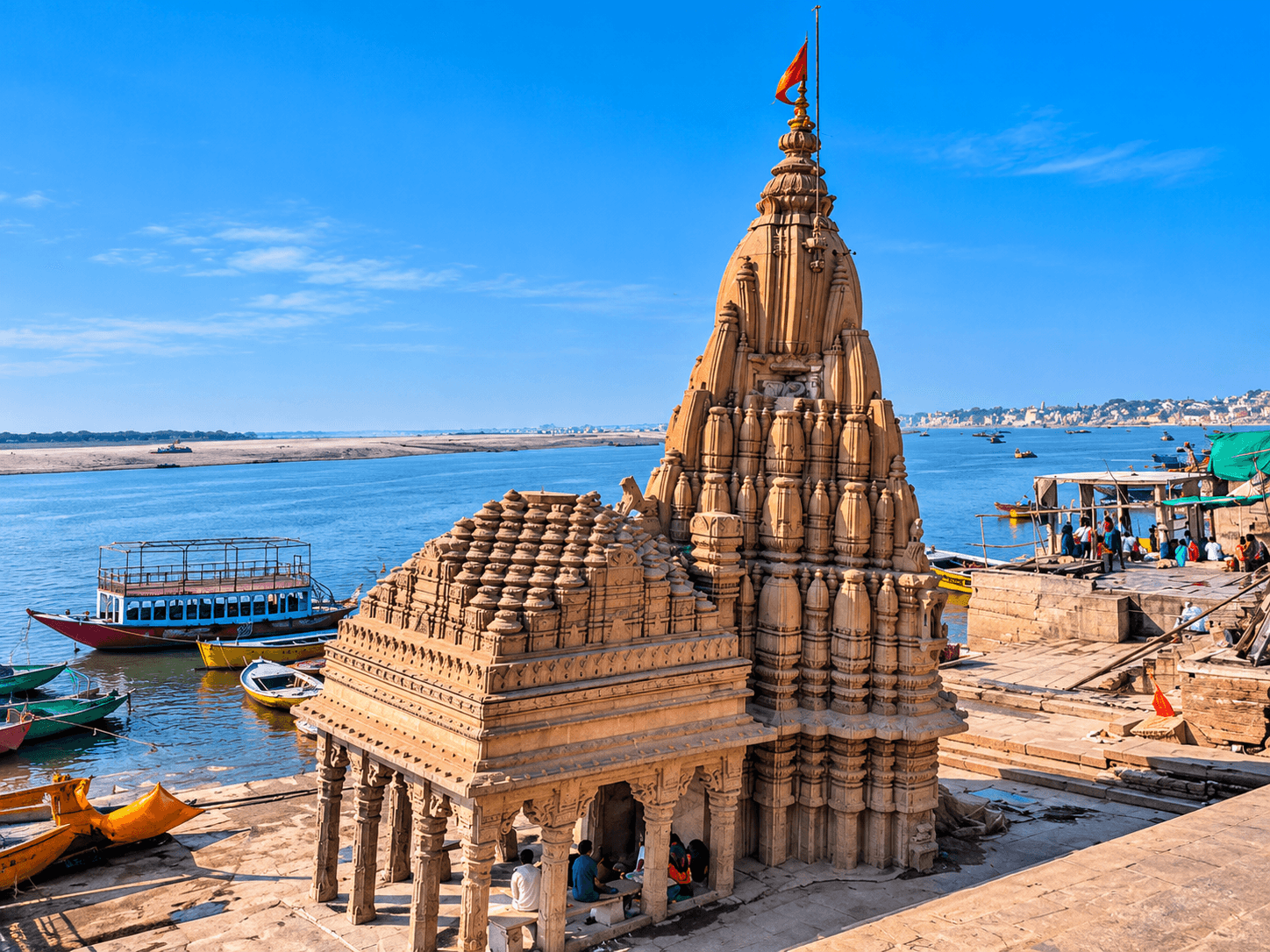
The leaning temple at Manikarnika — tilted several degrees, and submerged to its spire when the Ganga is high.
Introduction
About the Temple
Ratneshwar Mahadev Temple, popularly known as Kashi Karvat, is a distinctive shrine dedicated to Lord Shiva near the sacred Ganga and Manikarnika Ghat. The temple is especially recognised for its strikingly tilted structure, which has made it one of Varanasi’s most distinctive architectural landmarks. Built in the traditional North Indian Nagara style, the shrine reflects the craftsmanship and religious architecture associated with the historic riverfront of Kashi. Local tradition connects the temple with a story involving Ratna Bai and the enduring spiritual significance of a mother’s blessings. This account forms part of the temple’s popular religious folklore, while its unusual inclination has also attracted architectural and historical interest. The shrine’s relationship with the changing river level has influenced its visibility and accessibility over time. Dedicated to Mahadev, the temple remains a reminder of the deep connection between Shiva worship and the sacred geography of Varanasi. Its distinctive form, riverside location, and enduring place in local tradition make Ratneshwar Mahadev an important landmark in Kashi’s religious and cultural heritage.
Chronicle
History & Origins
The documented record
The temple's construction is the subject of several competing local accounts and no single one of them is documented well enough to state as fact here. What is not in dispute is the tilt, and that its low position on the ghat leaves it flooded for much of the year.
In depth
What Is Known, and What Is Told
The temple is built in the Nagara style and stands on the riverbank near Manikarnika, lower than almost any other temple on the ghats — so low that its sanctum is regularly under water and rises and falls with the Ganga. Its lean, usually given as about nine degrees, is most plausibly explained by that position: a foundation on silted riverbank, worked on year after year by the river's erosion and currents.
Local stories offer other explanations. The best known says the temple was built by a devoted servant in honour of his mother, Ratna Bai, and named after her — and that because a debt to one's mother can never be repaid, the temple leaned. Other versions differ. These are told as legends, and are recorded here only as such.
Approach the temple with care: the steps around it are often wet and slippery, and its surroundings change with the level of the river.
Significance
Spiritual Significance
The temple is a landmark of the riverfront and one of the defining images of the Varanasi ghats.
In devotional tradition
Several traditions are attached to the temple's tilt locally. They differ from one another and are not recorded here as fact.
This records traditional devotional belief and the practice of devotees. It is presented as religious tradition, not as a statement of fact or a promise of any outcome.
In depth
What the Old Records Show
For a building surrounded by legend, Ratneshwar has a surprisingly useful paper trail. The city's revenue records place its construction between 1825 and 1830. James Prinsep — the scholar who served as assay master of the Benares Mint in those years and drew the city's riverfront in detail — sketched the temple and noted that when its entrance was under water, the priest would dive in to perform the worship.
Photographs of the riverfront from the 1860s show the temple standing upright. The lean of roughly nine degrees that makes it famous developed afterwards, and the most plausible explanation is the one its position suggests: a foundation on waterlogged, shifting riverbank, worked on season after season by the Ganga. No official engineering study has been published, so the cause is best described as probable rather than proven.
That history is also the best guide for visiting. The temple rises and sinks with the river: in the summer months, before the monsoon, the most of it is exposed; from the monsoon into the autumn the sanctum is under water and the spire may be all that shows. A boat on the river gives the clearest view of the lean.
Worship
Deity, Worship & Rituals
- Presiding deity
- Shiva
Visitor guide
Darshan & Visitor Information
Best seen from the ghat steps or from the river. Access to the temple itself is limited and depends entirely on the water level; in the monsoon and after, it is simply not reachable. The summer months, when the river is low, expose the most of it.
Getting there
Location & How to Reach
Finding the temple
- Locality
- Manikarnika Ghat
- Address
- Below Manikarnika Ghat, Varanasi
- City
- Varanasi
How to reach
The temple stands at the foot of the steps below Manikarnika Ghat, between Manikarnika and Scindia Ghat. It is best seen from the ghat steps above it or from a boat on the river; reach Manikarnika on foot through the old city or along the ghats.
Visitors ask
Frequently Asked Questions
Practical answers for anyone planning darshan at Ratneshwar Mahadev Temple.
Ask the Samiti a questionTemples of Kashi Ratneshwar Mahadev Temple
Plan Your Visit
Planning a darshan at Ratneshwar Mahadev Temple, or hoping to arrange a puja in Kashi? The Samiti's team will gladly guide you on the visit and on the arrangements available.
Continue the yatra