
Heritage
Tulsi Manas Mandir
- Rama, with Sita, Lakshmana and Hanuman
- Durgakund · Varanasi
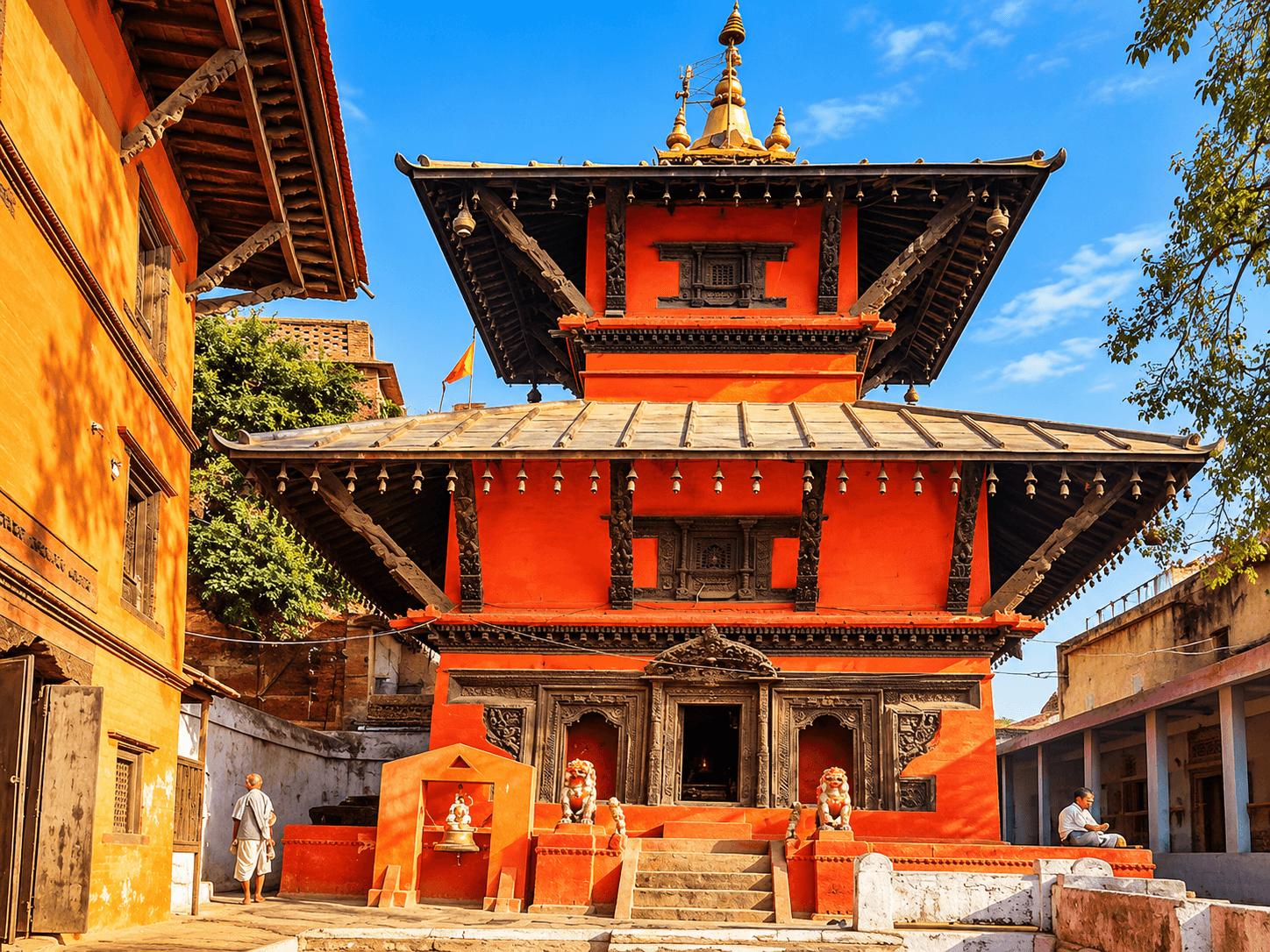
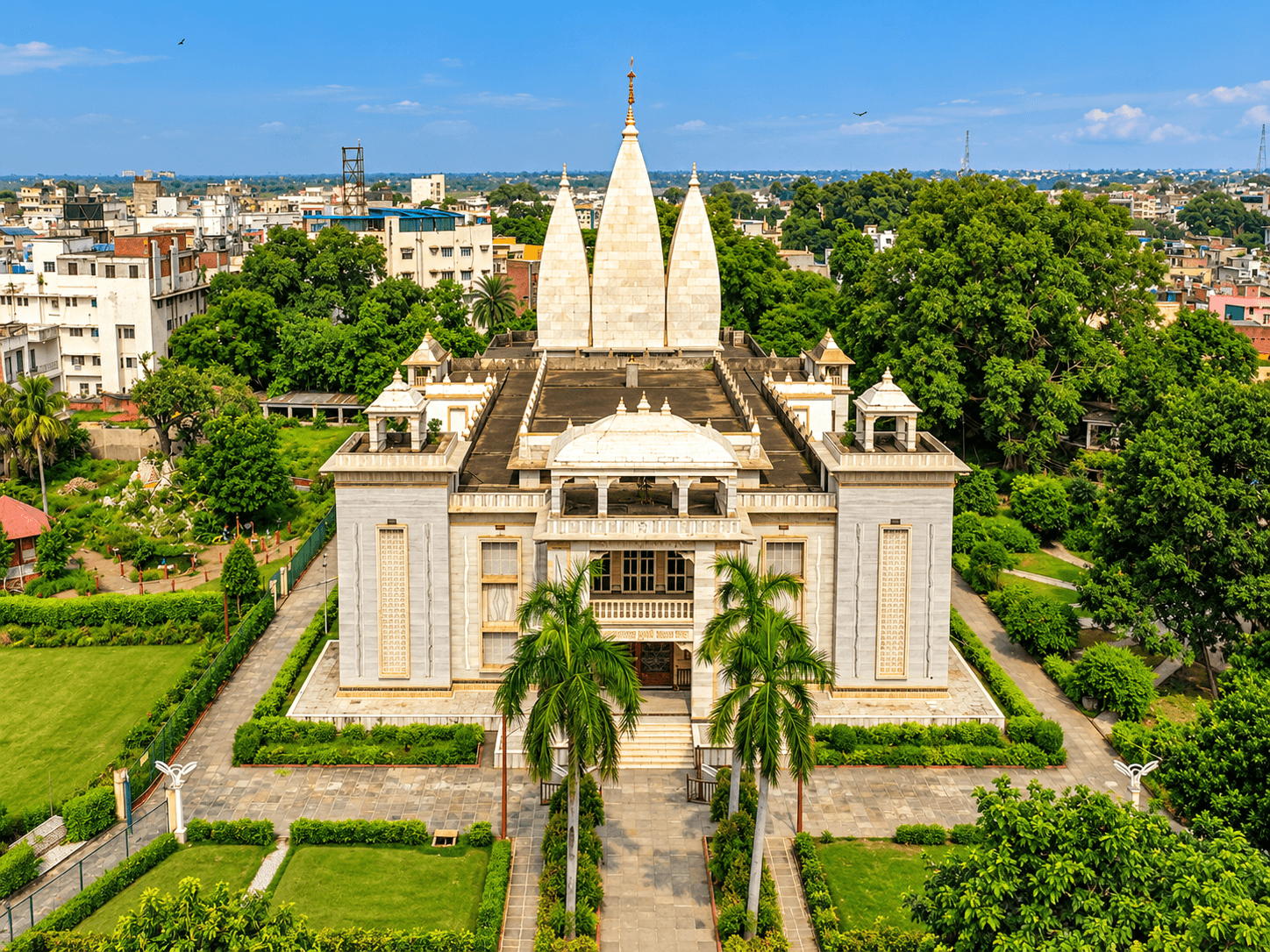
A 20th-century marble temple at Durgakund whose walls carry the text of the Ramcharitmanas.
Introduction
About the Temple
Tulsi Manas Mandir is a prominent temple dedicated to Lord Rama and celebrates the devotional legacy of Goswami Tulsidas, one of India’s most revered saint-poets. The temple stands in the Durga Kund area of Varanasi, at a site traditionally associated with Tulsidas and his connection with the Ramcharitmanas, his celebrated retelling of the Ramayana in Awadhi. Constructed in 1964, the temple is distinguished by its white marble architecture and walls bearing verses and episodes from the sacred epic. These inscriptions bring the teachings of Lord Rama to life, highlighting dharma, compassion, truthfulness, humility, and devotion. The temple offers devotees a meaningful opportunity to reflect on the ideals embodied by Shri Ram, Maa Sita, Lakshman, and Hanuman. Religious gatherings and celebrations, particularly those associated with Ram Navami, deepen its devotional atmosphere. Tulsi Manas Mandir represents the beautiful meeting of worship, literature, and spiritual learning, preserving a cherished tradition through which the timeless message of the Ramcharitmanas continues to inspire generations.
Chronicle
History & Origins
The documented record
The temple was built in 1964. It is dedicated to Rama and commemorates Tulsidas, whose Ramcharitmanas — the retelling of the Ramayana in Awadhi that shaped devotional practice across northern India — was composed in Varanasi in the 16th century.
As tradition tells it
The temple was built in 1964 and inaugurated by Dr Sarvepalli Radhakrishnan, then President of India.
Recorded as sacred narrative, distinct from the documented history.
Significance
Spiritual Significance
The temple is a place of reading as much as of worship: visitors come specifically to walk the walls and read the text.
In devotional tradition
Devotees traditionally read or recite from the Ramcharitmanas here. The temple is also valued as a place to sit with the text rather than only to take darshan.
This records traditional devotional belief and the practice of devotees. It is presented as religious tradition, not as a statement of fact or a promise of any outcome.
In depth
Tulsidas in Kashi
Goswami Tulsidas spent much of his life in Varanasi, and the city keeps his memory along the river: Tulsi Ghat, a short distance from this temple, is named after him, and it is in Kashi that he is traditionally held to have composed the Ramcharitmanas — the retelling of the Ramayana in Awadhi that became the devotional text of northern India. He is generally said to have died at Assi Ghat in 1623, though the date is not certain in every source.
Tulsi Manas Mandir was built as a memorial to that work. It was raised by the Sureka family, merchants of Howrah and Kolkata, on garden land near Durgakund, and completed in 1964; tradition places it on the very ground where the poet wrote. Hence the temple's defining feature — the verses of the Ramcharitmanas inscribed on its marble walls.
During Saawan, the monsoon month, the temple also mounts an exhibition of handcrafted puppets enacting scenes from the Ramayana, a seasonal tradition that draws families from across the city.
Worship
Deity, Worship & Rituals
- Presiding deity
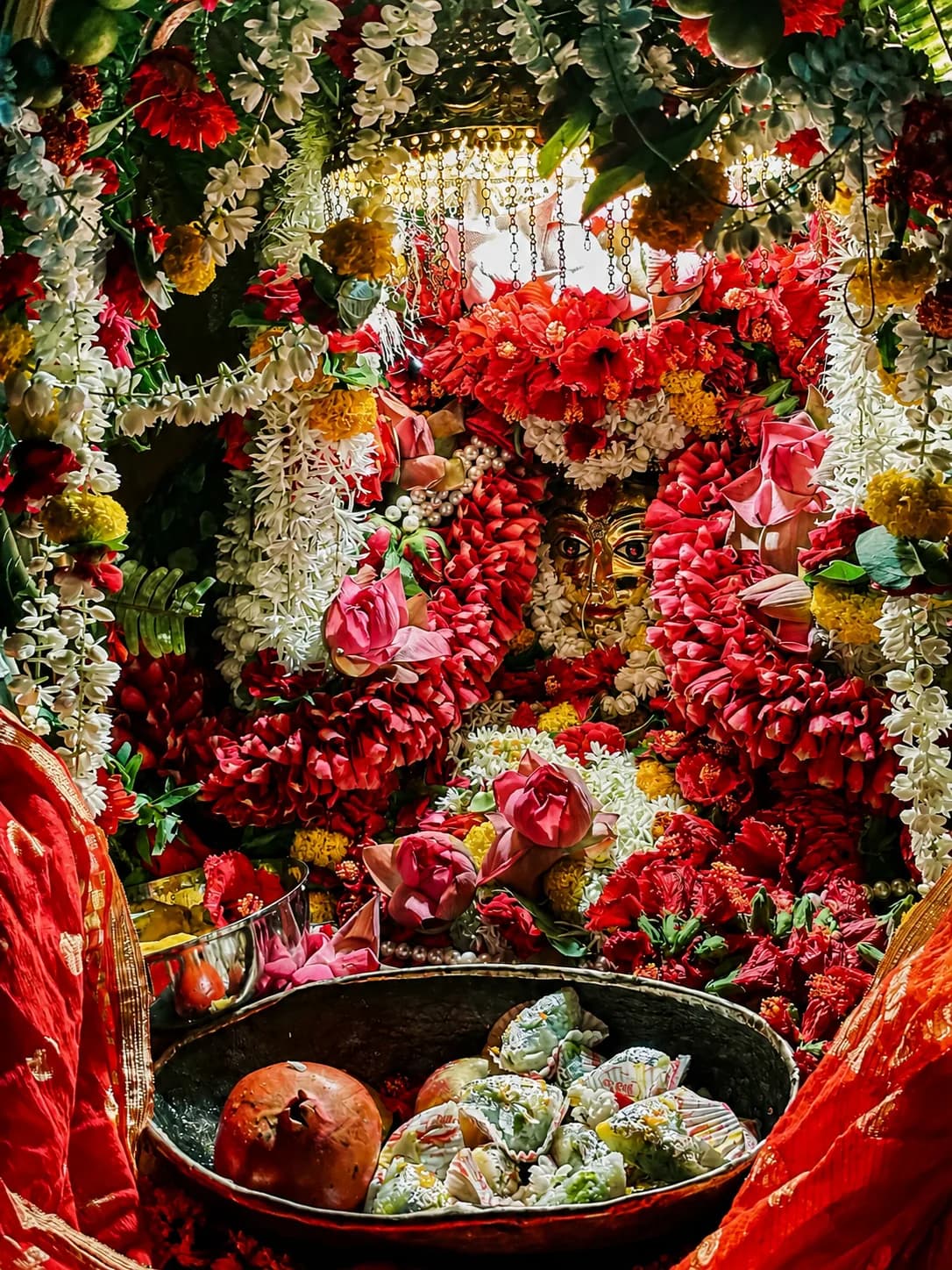
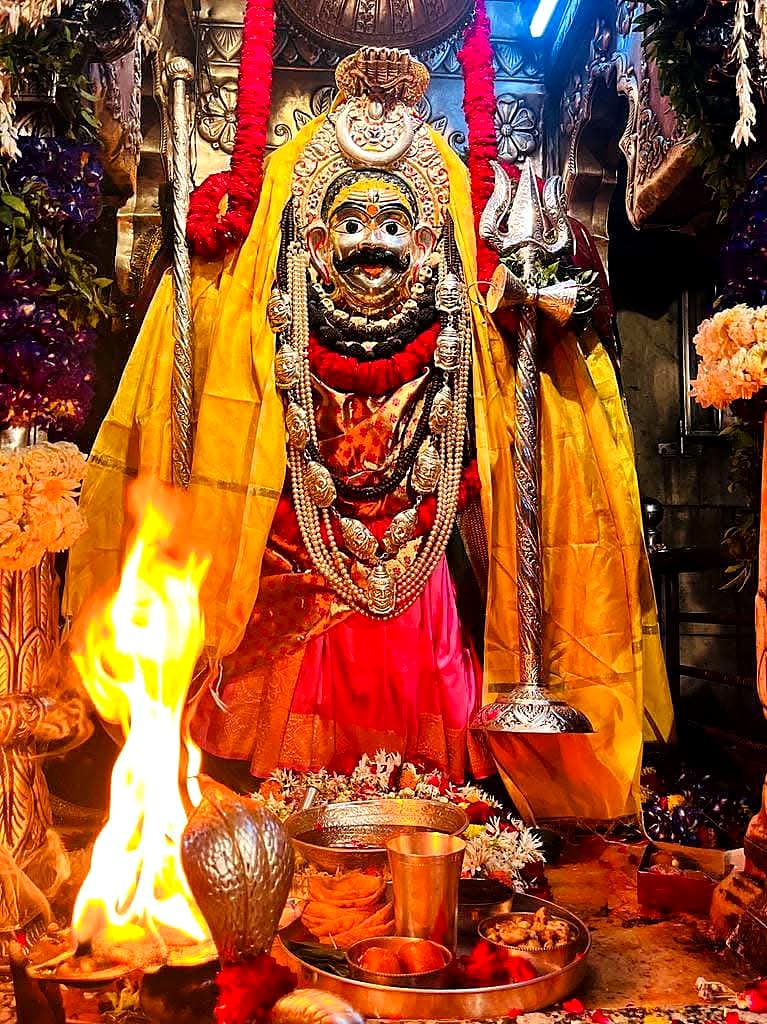
- Rama, with Sita, Lakshmana and Hanuman
Worship & ritual
Regular worship of Rama is conducted. Recitation of the Ramcharitmanas is the characteristic devotion.
In depth
Reading the Walls
The marble walls of the temple carry verses of the Ramcharitmanas, set beside depictions of episodes from Rama's life — scenes chosen for what they teach of dharma, devotion and righteous conduct. A visitor can walk the temple as one would turn the pages of the book.
In the sanctum are the images of Rama, Sita, Lakshmana and Hanuman. The temple is also a place of study: recitations of the Ramcharitmanas, discussions of Tulsidas's works and devotional singing are held regularly, and they gather the largest audiences at Rama Navami and the other festivals of Rama.
Sacred calendar
Festivals
Rama Navami is the principal festival.
Darshan
Darshan Timings
Darshan hours
Opens
5:30 AM
Closes
9:00 PM
Set by the temple, and changed on festivals, eclipses and special occasions. Please confirm locally before travelling.
Closed in the afternoon, approximately 12:00 noon to 3:30 PM. Aarti is held at 6:00 AM and 4:00 PM.
Generally open from early morning until evening, with an afternoon closure. Timings vary on festivals, eclipses and special occasions — confirm locally before travelling.
Visitor guide
Darshan & Visitor Information
The marble interior is cool and the compound has gardens, which makes this one of the more comfortable temple visits in the city, particularly in summer. It is easily combined with Durga Kund and Sankat Mochan, which are within walking distance.
Getting there
Location & How to Reach
Finding the temple
- Locality
- Durgakund
- Address
- Durgakund Road, Varanasi, Uttar Pradesh
- City
- Varanasi
How to reach
The temple is at Durgakund, beside the Durga temple and a short distance from Sankat Mochan, in the south of the city. Auto-rickshaws and taxis can reach the gate.
Varanasi Junction (BSB) is the nearest major railway station, and Lal Bahadur Shastri International Airport (VNS) the nearest airport.
Visitors ask
Frequently Asked Questions
Practical answers for anyone planning darshan at Tulsi Manas Mandir.
Ask the Samiti a questionTemples of Kashi Tulsi Manas Mandir
Plan Your Visit
Planning a darshan at Tulsi Manas Mandir, or hoping to arrange a puja in Kashi? The Samiti's team will gladly guide you on the visit and on the arrangements available.
Continue the yatra