
Heritage
Shri Samrajeshwar Pashupatinath (Nepali Temple)
- Shiva (as Pashupatinath)
- Lalita Ghat · Varanasi
A 19th-century temple in Nepalese wood and terracotta at Lalita Ghat, modelled on Pashupatinath in Kathmandu.
Introduction
About the Temple
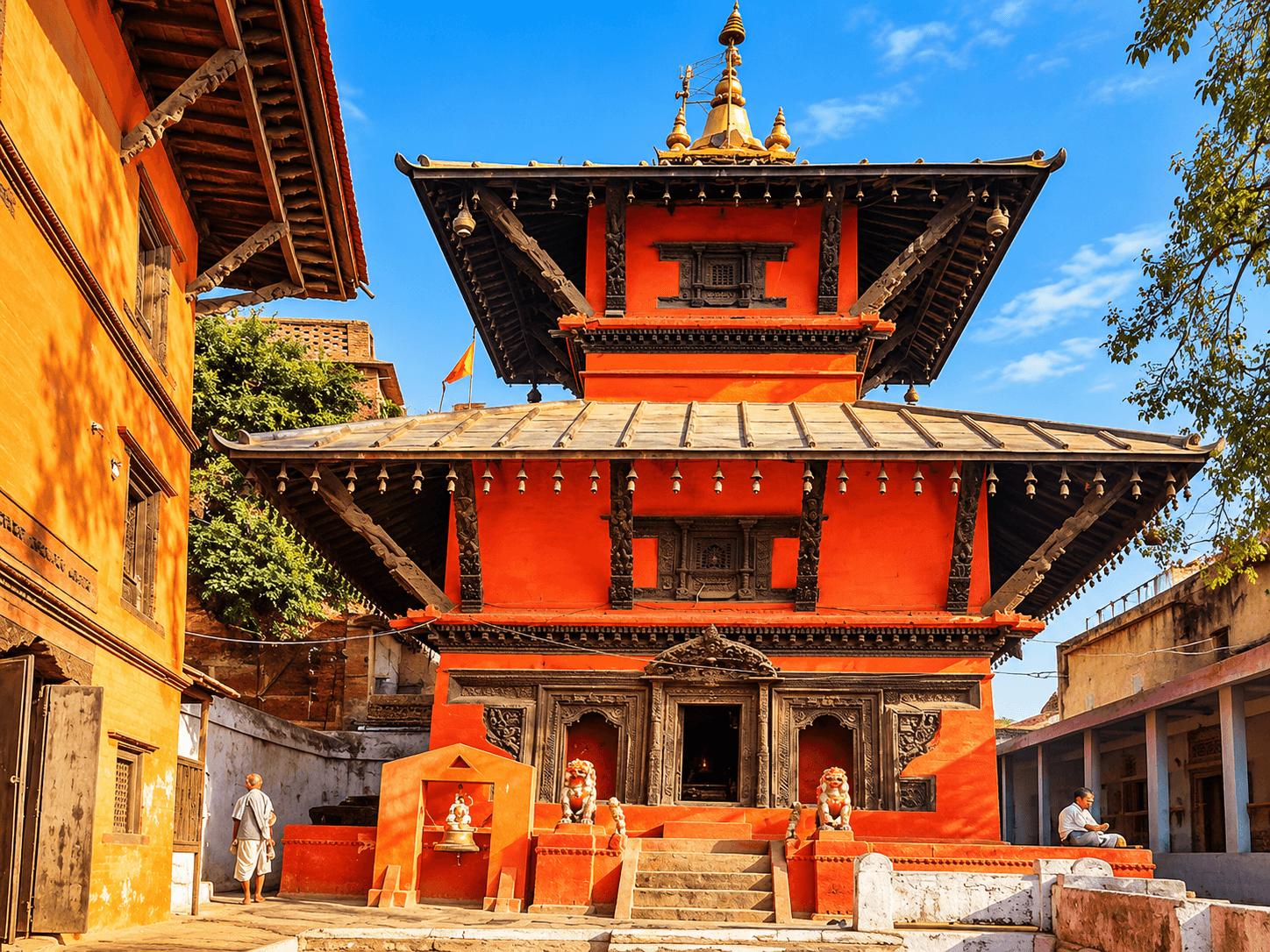
The Nepali Temple near Lalita Ghat is a distinctive Shiva shrine known for its close architectural and spiritual connection with Nepal’s revered Pashupatinath tradition. Also known as the Nepali Mandir and Samrajeshwar Shiva Temple, it is dedicated to Lord Shiva, worshipped here as Pashupatinath, the Lord of all living beings. The temple was established through Nepalese royal patronage in the nineteenth century and reflects the traditional pagoda-style architecture associated with Nepal. Its construction incorporates wood, stone, and terracotta, with intricately carved wooden elements that distinguish it from many other temples in Varanasi. Situated near the sacred Ganga, the shrine reflects the longstanding spiritual and cultural relationship between Kashi and Nepal. Devotees visit to offer prayers to Lord Shiva and experience the distinctive atmosphere of this historic place of worship. The Nepali Temple is significant not only for its religious importance but also for preserving a shared heritage of pilgrimage, craftsmanship, and Shaiva devotion across the two sacred centres.
Chronicle
History & Origins
The documented record
The temple was built in the 19th century at the commission of a king of Nepal, with craftsmen and materials brought from Nepal for the purpose. It remains under Nepalese patronage.
As tradition tells it
The temple was begun in the early 1800s by King Rana Bahadur Shah of Nepal, during the years he spent in Varanasi, as a counterpart of the Pashupatinath temple in Kathmandu. It was completed decades later under the patronage of the Nepalese royal house; its completion is commonly given as 1843.
Recorded as sacred narrative, distinct from the documented history.
Significance
Spiritual Significance
It is the principal piece of Nepalese architecture in Varanasi and a reminder of the long-standing links between Kashi and the Kathmandu valley.
In devotional tradition
Devotees offer the customary worship of Shiva. For pilgrims from Nepal in particular, the temple is a point of connection with home.
This records traditional devotional belief and the practice of devotees. It is presented as religious tradition, not as a statement of fact or a promise of any outcome.
In depth
A King in Exile, and Forty Years of Building
The temple began with a king who had left his throne. Rana Bahadur Shah of Nepal spent roughly the years 1800 to 1804 in Varanasi, living as a renunciate under the name Swami Nirgunananda, and during that stay resolved to build in Kashi a counterpart of the Pashupatinath temple of Kathmandu. Craftsmen and timber were brought from Nepal for the work.
He returned to Nepal before it was finished and was killed there in 1806. The building passed to his successors: his son Girvan Yuddha Bikram Shah carried the project on, and the temple was completed only in 1843 — some four decades after it was begun. It remains under Nepalese patronage today.
Its carving is the other reason visitors come. The wooden struts and eaves are worked in the dense figurative manner of Kathmandu valley temples — detailed enough to have earned the temple the local nickname "Mini Khajuraho". The carving is weathered, fragile wood; look closely, but do not touch.
Worship
Deity, Worship & Rituals
- Presiding deity
- Shiva (as Pashupatinath)
Worship & ritual
Worship of Shiva in the Pashupatinath form.
In depth
Wood, Stone and Terracotta
The temple is built in the pagoda form of the Kathmandu valley, in termite-resistant wood brought from Nepal together with stone and terracotta. Its carved struts and eaves carry the Tantric imagery characteristic of Nepalese temple art.
A small Nandi stands at the entrance. Four doorways, one to each cardinal direction, open around the inner sanctum, where Shiva is worshipped as Pashupatinath in a Narmadeshwar linga — a naturally formed stone from the Narmada — encircled by serpents.
The temple's repair and conservation are overseen by the Guthi Sansthan of Nepal, and Nepali pilgrims often stand in quiet prayer under its wooden eaves.
Sacred calendar
Festivals
Mahashivratri is observed.
Visitor guide
Darshan & Visitor Information
Reached from the riverfront at Lalita Ghat, a short walk from Manikarnika. The carved woodwork is the reason to visit; photography of the exterior is generally acceptable but ask before photographing inside.
Getting there
Location & How to Reach
Finding the temple
- Locality
- Lalita Ghat
- Address
- Lalita Ghat, Varanasi
- City
- Varanasi
How to reach
The temple stands directly above Lalita Ghat, a short walk along the riverfront from Manikarnika. It can be reached on foot along the ghats, or through the lanes of the old city from the Vishwanath side.
Varanasi Junction (BSB) is the nearest major railway station, and Lal Bahadur Shastri International Airport (VNS) the nearest airport.
Visitors ask
Frequently Asked Questions
Practical answers for anyone planning darshan at Shri Samrajeshwar Pashupatinath (Nepali Temple).
Ask the Samiti a questionTemples of Kashi Shri Samrajeshwar Pashupatinath (Nepali Temple)
Plan Your Visit
Planning a darshan at Shri Samrajeshwar Pashupatinath (Nepali Temple), or hoping to arrange a puja in Kashi? The Samiti's team will gladly guide you on the visit and on the arrangements available.
Continue the yatra