
Buddhist
Mulagandha Kuti Vihar, Sarnath
- The Buddha (Buddhist temple)
- Sarnath · Varanasi
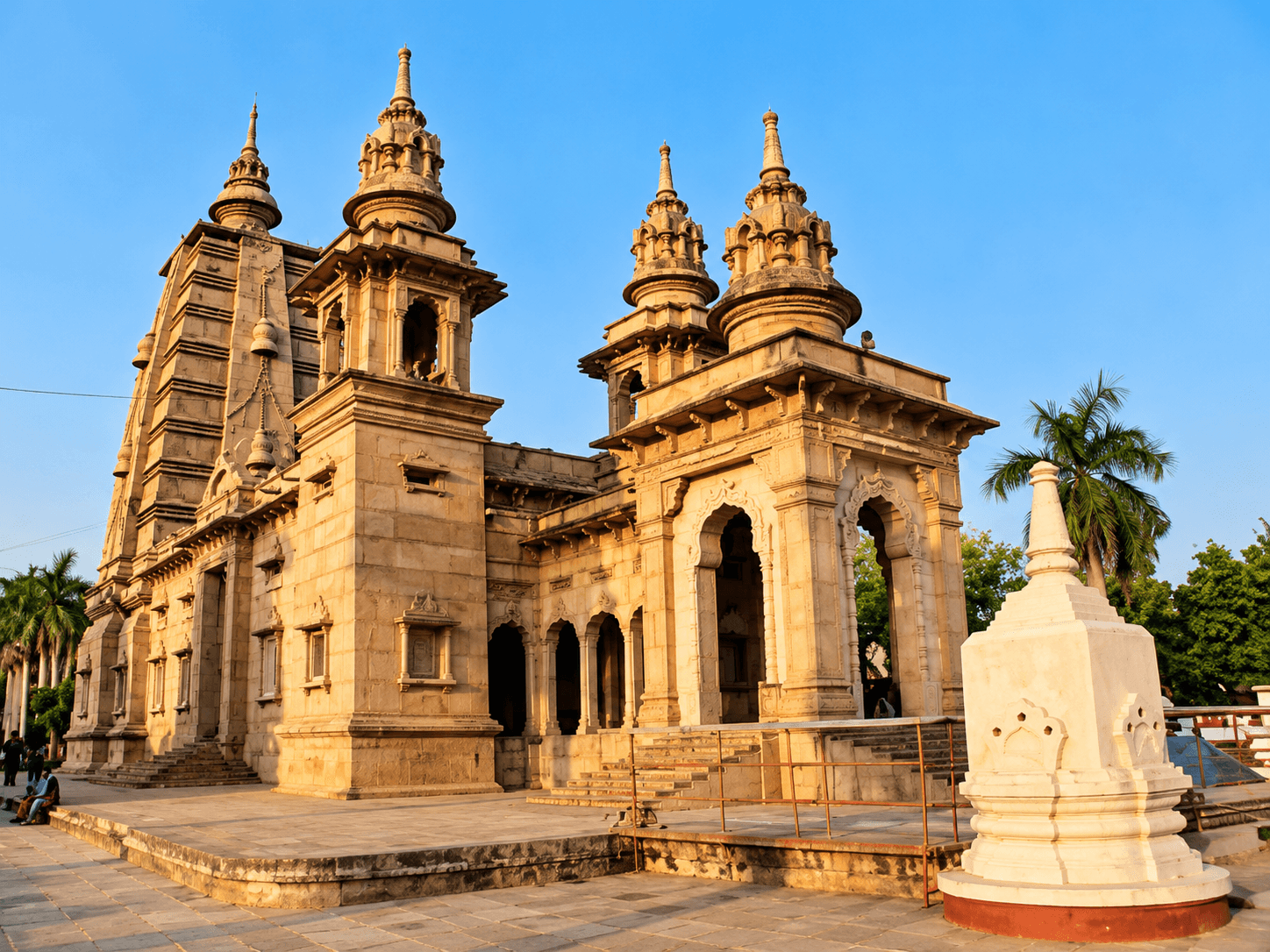
A Buddhist temple at Sarnath, where the Buddha is traditionally held to have given his first sermon.
Introduction
About the Temple
Mulagandha Kuti Vihar is a prominent Buddhist temple in Sarnath, the sacred place where Gautama Buddha delivered his first sermon after attaining enlightenment. Through this first teaching, known as the Dhammacakkappavattana Sutta, the Buddha explained the path of understanding and liberation, laying the foundation for the Buddhist Sangha. The present Mulagandha Kuti Vihar was established in the twentieth century through the efforts of Anagarika Dharmapala and the Maha Bodhi Society, with the temple completed in 1931. Its religious significance is closely connected with Sarnath’s role in the history of Buddhism and the spread of the Buddha’s teachings. The temple is known for its devotional atmosphere, Buddhist art, and association with sacred relics. Visitors and practitioners from different Buddhist traditions come here to meditate, offer prayers, and reflect on the teachings of wisdom, compassion, mindfulness, and non-attachment. Mulagandha Kuti Vihar stands as an important spiritual landmark of Sarnath, preserving the living Buddhist heritage of a place central to the history of the Dharma.
Chronicle
History & Origins
The documented record
The vihar was built by the Mahabodhi Society, founded by Anagarika Dharmapala, and was completed in 1931. Its interior frescoes were painted by the Japanese artist Kosetsu Nosu.
Significance
Spiritual Significance
Sarnath is one of the four principal places of Buddhist pilgrimage, and the vihar is its active centre of worship. The Dhamek Stupa and the archaeological site adjoining it date to a far earlier period.
In devotional tradition
For Buddhists this is one of the four places a pilgrim is traditionally enjoined to visit. It is included here because it is among the most significant religious sites in Varanasi district, though it belongs to a different tradition from the rest of this directory.
This records traditional devotional belief and the practice of devotees. It is presented as religious tradition, not as a statement of fact or a promise of any outcome.
In depth
The Bodhi Tree and the Opening of the Vihar
The vihar was opened in November 1931. It was the work of Anagarika Dharmapala and the Maha Bodhi Society he founded, who set out to restore a living centre of Buddhist worship at Sarnath beside the excavated ruins; much of the cost was met by Mary Foster, the society's principal benefactor.
At the opening, a sapling of the Sri Maha Bodhi of Anuradhapura in Sri Lanka was planted in the grounds. The Anuradhapura tree is itself held by Buddhist tradition to have grown from a branch of the tree at Bodh Gaya under which the Buddha attained enlightenment, carried to Sri Lanka by the nun Sanghamitta — so the tree at Sarnath stands in a line that pilgrims trace back to the enlightenment itself. It grows beside the vihar today.
Inside, the walls carry the fresco cycle of the Buddha's life painted by the Japanese artist Kosetsu Nosu, and relics of the Buddha are enshrined beneath the main altar. Together with the Dhamek Stupa a few minutes' walk away, these make the vihar the active heart of a site otherwise known through its ruins.
Worship
Deity, Worship & Rituals
- Presiding deity
- The Buddha (Buddhist temple)
Worship & ritual
Buddhist observance, including chanting. Visitors of all backgrounds are welcome.
In depth
The Relics and the Anniversary
Relics of the Buddha are enshrined in the vihar, beneath the main altar, where a gold-coloured image of the Buddha in the teaching posture presides.
The vihar was opened in November 1931, and the anniversary of its opening, around Kartik Purnima, is the one occasion each year when the relics are brought out for public veneration and carried in procession. Pilgrims from across Asia come for it.
Sacred calendar
Festivals
Buddha Purnima is the principal observance and draws pilgrims from across Asia.
In depth
Beside the Vihar: the Dhamek Stupa
A short walk from the vihar stands the Dhamek Stupa, which marks the place where, by Buddhist tradition, the Buddha gave his first sermon to five disciples after his enlightenment at Bodh Gaya — the teaching of the Four Noble Truths and the Eightfold Path.
The original stupa is attributed to the emperor Ashoka in the 3rd century BCE; it was rebuilt and enlarged over the following centuries, notably in the Gupta period. The structure that stands today is about 43.6 metres high and 28 metres across, of brick faced with carved stone, with geometric and floral ornament on its lower course.
Around it lie the excavated remains of monasteries, smaller stupas and shrines that made Sarnath a great centre of Buddhist learning.
Visitor guide
Darshan & Visitor Information
Sarnath is a separate trip from the ghats — allow half a day. The archaeological site and the Sarnath Museum, which holds the Ashokan lion capital, are adjacent and should be seen on the same visit. Shoes are removed before entering the vihar.
Getting there
Location & How to Reach
Finding the temple
- Locality
- Sarnath
- Address
- Sarnath, Varanasi, Uttar Pradesh
- City
- Varanasi
How to reach
Sarnath is about 10 km from Varanasi and is reached by road — auto-rickshaw, taxi or bus. The vihar stands beside the Dhamek Stupa and the excavated site; the Sarnath Museum is a short walk away.
Varanasi Junction (BSB) is the nearest major railway station, and Lal Bahadur Shastri International Airport (VNS) the nearest airport.
Visitors ask
Frequently Asked Questions
Practical answers for anyone planning darshan at Mulagandha Kuti Vihar, Sarnath.
Ask the Samiti a questionTemples of Kashi Mulagandha Kuti Vihar, Sarnath
Plan Your Visit
Planning a darshan at Mulagandha Kuti Vihar, Sarnath, or hoping to arrange a puja in Kashi? The Samiti's team will gladly guide you on the visit and on the arrangements available.
Continue the yatra