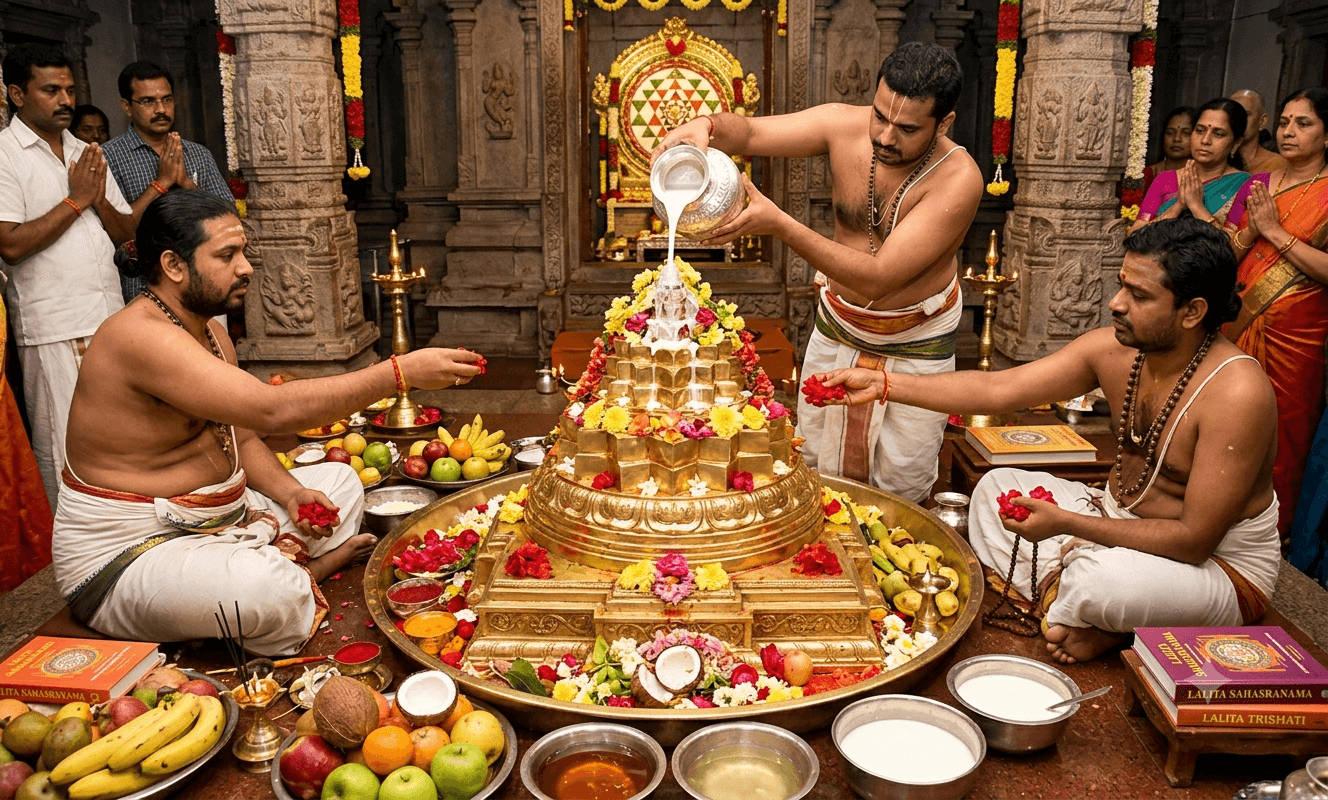
Ritual bathing of the Shriyantra with panchamrita and pure water, followed by archana. Offered from a single abhishekam through to a full multi-part anushthan.
 1 ACHARYA₹1,100
Abhishekam of the Sri Chakra with the five traditional substances, poured in the prescribed order with the accompanying mantras, and closed with a short archana.
 3 ACHARYA₹5,100
The extended abhishekam: a longer sequence of bathing substances with the Vidya mantra and the relevant suktas recited throughout, followed by full archana and aarti.
 5 ACHARYA₹2,100
A sacred worship of Goddess Lalita Tripura Sundari, performed by 5 Acharyas with traditional Abhishekam, Archana, sacred offerings, and prayers. Devotees may book the Puja for themselves or their families and seek the Goddess’s blessings for prosperity, peace, harmony, auspiciousness, and spiritual well-being.
 11 ACHARYA, 3 DAYS₹21,000
A sacred three-day Shri Yantra worship performed by 11 Acharyas, featuring Abhishekam, Lakshya Archana, traditional prayers, and devotional offerings. Devotees may dedicate the Anushthan to themselves or their families and seek blessings for prosperity, peace, auspiciousness, harmony, and spiritual well-being.
Shriyantra Abhishekam & Archana is a traditional form of worship centered on the sacred Shri Yantra and the Divine Mother, especially Goddess Lalita Tripura Sundari. The ceremony brings together sacred bathing, devotional offerings, prayers, and the recitation of divine names as a complete form of Shri Yantra worship. The Shri Yantra holds an important place in the traditional worship of the Divine Mother. It is approached as a sacred representation through which devotees offer their prayers and devotion. Traditional Devi texts describe the worship of the Goddess through a yantra and prescribe respectful offerings such as water, fragrances, flowers, lamps, food and sacred recitations. They also describe bathing the Goddess with sacred substances as part of formal worship. During Shriyantra Abhishekam, the Shri Yantra is respectfully bathed using water and, where appropriate to the material of the Yantra and the ritual tradition being followed, other sacred substances. This is followed by drying and preparing the Yantra for further worship. Flowers, Kumkum, sandalwood, incense, lamps and food offerings may then be offered while sacred names and prayers are recited. The ceremony may be arranged for an individual or family and may be performed for a specific personal intention. Devotees traditionally seek the blessings of the Divine Mother for prosperity, peace, harmony, auspiciousness, spiritual strength, abundance and overall well-being.
The Shri Yantra is one of the most important sacred forms associated with the worship of the Divine Mother. The traditional Lalita literature describes Goddess Lalita as residing in the Shri Chakra and gives the Shri Chakra an important place in her worship.
Navavarana worship focuses on the nine sections of the Shri Yantra, moving through its sacred structure toward the central point. Each section is traditionally connected with particular divine powers and forms of the Goddess. The worship therefore follows an ordered movement from the outer part of the sacred diagram toward its center.
The Devi Bhagavata Purana provides an important broader textual basis for this style of worship. It describes the Goddess being worshipped through a yantra and instructs the worshipper to honor the associated divine forms and different parts of the yantra with traditional offerings.
In the Shri Vidya tradition, the center of the Shri Yantra represents the supreme presence of the Divine Mother. Navavarana worship therefore combines devotion, sacred names, offerings, concentration, and contemplation in a structured form of Goddess worship.
The purpose of the ceremony is not limited to material prosperity. Devotees approach the Divine Mother seeking peace, abundance, harmony, spiritual awareness, auspiciousness, and divine grace.
Blessings of the Divine Mother – A devotional form of worship seeking the grace of Goddess Lalita and the Divine Mother.
Prosperity & Abundance – Traditionally performed with prayers for prosperity, nourishment, abundance and a well-supported life.
Peace & Harmony – Encourages a peaceful devotional environment and prayers for harmony within the family.
Auspiciousness – Performed as a sacred prayer for divine blessings during important phases and occasions.
Spiritual Strength – Encourages devotion, concentration, discipline and a deeper connection with the Divine.
Divine Grace & Protection – Devotees offer prayers seeking guidance, support and divine protection through life's challenges.
Shri Yantra Abhishekam – Traditional bathing of the Shri Yantra using appropriate sacred substances according to the ritual method followed.
Shri Yantra Archana – Worship of the Shri Yantra with flowers, Kumkum, sandalwood and other traditional offerings.
Sacred Name Recitation – Recitation of appropriate divine names and prayers during the worship.
Personal Prayer – Your name, family details and devotional intention can be included in the prayer.
Prasad & Blessings – Prasad from the completed worship according to the selected service and available arrangements.
Preparation – The Shri Yantra and worship area are carefully prepared with the required sacred items.
Personal Prayer – The devotee's name, family details and purpose of worship are included in the opening prayer.
Shri Yantra Abhishekam – The Shri Yantra is respectfully bathed with sacred water and other appropriate substances according to the ritual tradition and the material of the Yantra.
Shri Yantra Worship – After the Abhishekam, the Yantra is prepared for worship and offered flowers, Kumkum, sandalwood and other traditional offerings.
Divine Names & Prayers – Sacred names and prayers are recited while offerings are made with devotion and concentration.
Aarti & Final Prayer – The ceremony concludes with Aarti, final prayers and blessings for the devotee and family.
Choose a package, share your details, and our team will confirm your booking within 24 hours.
Choose a Package