
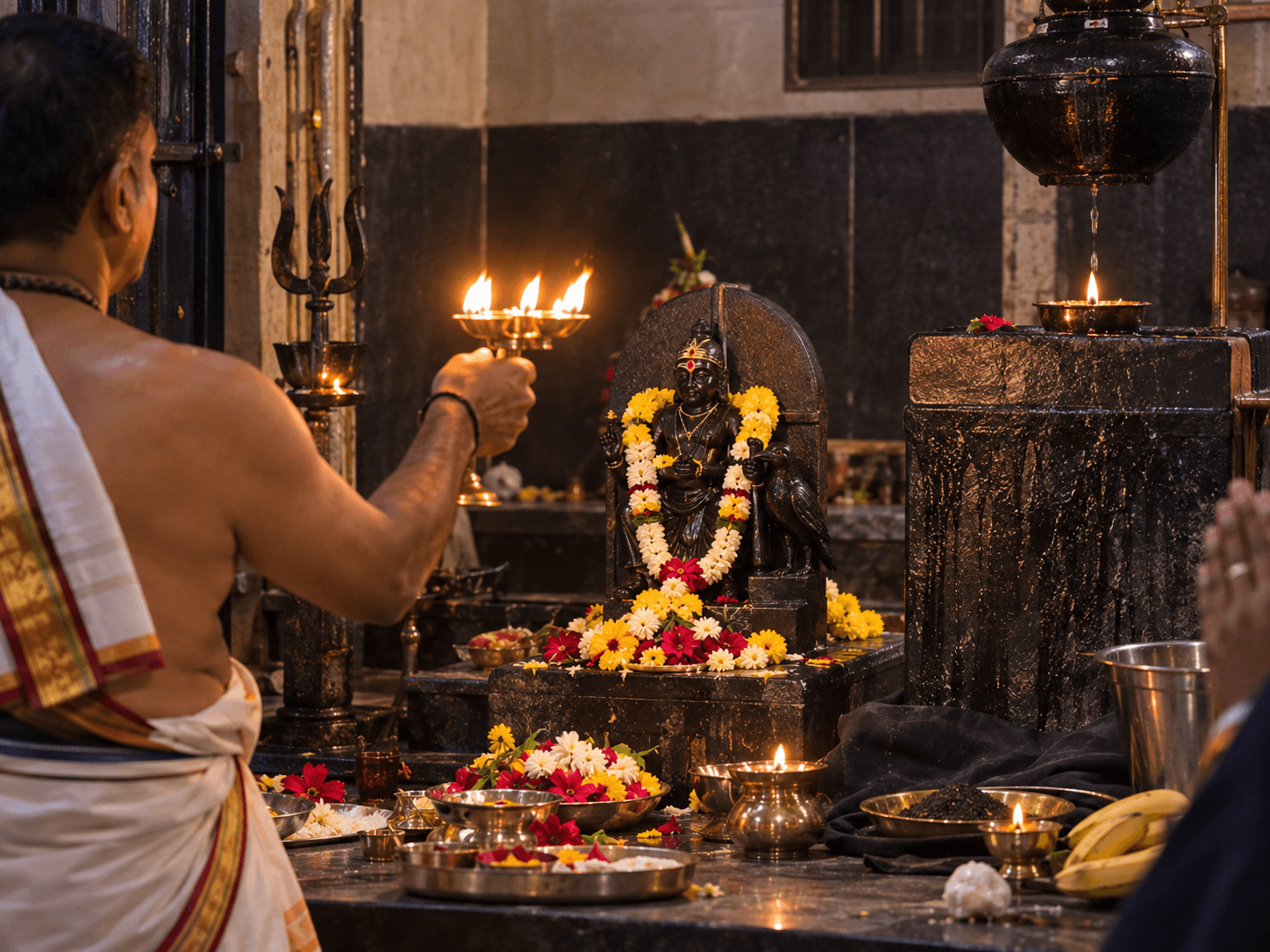
Propitiation of Shani with the offerings the tradition assigns to him — sesame, sesame oil, black cloth and iron — customarily on a Saturday.
 ₹3,100
A sacred worship dedicated to Shani through traditional mantras, prayers, and offerings, seeking peace, stability, patience, discipline, and divine support during important or challenging phases of life.
 ₹5,100
A sacred worship of Shani with traditional Puja and Til Oil Abhishekam, accompanied by mantras, prayers, and devotional offerings, seeking peace, stability, patience, protection, and harmony during challenging periods.
 3 ACHARYAS₹15,100
A sacred worship dedicated to Shani, combining traditional Puja, mantras, prayers, and sacred fire offerings to seek peace, stability, patience, discipline, and harmony during important or challenging periods.
 5 ACHARYAS, 3 DAYS₹51,000
A sacred 3-day Anushthan dedicated to Shani, performed by 5 Acharyas with traditional mantras, prayers, offerings, and devotional worship. Devotees may dedicate the Anushthan to their heartfelt intentions and seek blessings for peace, stability, patience, discipline, and divine support.
Shani Shanti Puja is a traditional worship dedicated to Shani, one of the nine Grahas in Hindu Jyotisha. The Puja is performed with traditional mantras, prayers, offerings, and a sincere Sankalp, seeking peace, stability, patience, protection, and harmony during challenging or important periods of life. Shani holds an important place in the traditional understanding of Jyotisha. Rather than viewing Shani only through difficult planetary influences, traditional worship approaches Shani with respect, discipline, humility, and devotion. Shani is associated with patience, responsibility, perseverance, justice, and the consequences of one's actions. The Matsya Purana includes Shani within its detailed Navagraha Shanti tradition. It describes Shani's traditional form, placement, colour, offerings, and the worship performed for the pacification of the Grahas. It also gives a specific mantra for Shani within the Shanti ceremony. During Shani Shanti Puja, Shani is respectfully invoked and worshipped with prescribed mantras and offerings. Traditional materials associated with Shani may include dark-coloured flowers and other offerings according to the ritual tradition. The Matsya Purana also describes Shani being offered khichdi or cooked rice with lentils and ghee within the Navagraha worship procedure. The Puja may be chosen when a devotee wishes to perform Shani worship during an important planetary period, as part of traditional Jyotisha guidance, or simply as a devotional practice seeking steadiness, wisdom, patience, and divine support. The exact mantras, offerings, recitations, and ritual sequence may vary according to the selected service and the tradition followed by the Acharyas.
Shani Shanti Puja belongs to the traditional Navagraha worship and Shanti practices preserved in Hindu ritual literature. Shanti means peace or pacification, and the purpose of this form of worship is to approach Shani with reverence and perform the prescribed prayers and offerings during periods when Shani worship is considered appropriate.
The Matsya Purana gives a detailed description of the nine Grahas and their Shanti procedure. In its description of Shani, it gives his traditional form, dark-blue appearance, placement in the Navagraha arrangement, and associated worship practices. It also specifies Shani's traditional food offering as khichdi or cooked rice with lentils and ghee.
The same Shanti procedure includes a specific Vedic mantra for Shani beginning with “Sham no devīr abhiṣṭaye”, showing that Shani worship within the Navagraha tradition is connected with sacred mantra recitation and not merely with symbolic offerings.
Traditional Shani worship is therefore approached with an attitude of humility, discipline, patience, and sincere prayer. Devotees honour Shani while reflecting upon responsibility, right conduct, perseverance, and acceptance of life's difficulties.
The exact Puja sequence, mantras, offerings, and additional practices can differ according to the ritual tradition and the specific Sankalp of the devotee.
Seek Shani's Blessings – Offer sincere prayers through traditional Shani worship.
Peace & Stability – Pray for steadiness and harmony during challenging periods.
Patience & Perseverance – Seek strength to face responsibilities and difficulties with discipline.
Protection & Guidance – Offer prayers for support while navigating important phases of life.
Clarity & Self-Discipline – Encourage thoughtful action, responsibility, and inner steadiness.
Auspiciousness & Well-being – Dedicate the Puja to sincere personal and family prayers.
Traditional Shani Shanti Puja performed by Acharyas
Shani mantra recitation and traditional prayers
Shani-specific offerings according to the selected ritual
Personal Sankalp with your name and prayer intention
Traditional worship and concluding Aarti
Prasad according to the selected service
Preparation – The Puja space and traditional materials required for Shani worship are prepared according to the prescribed ritual.
Sankalp – Your name, Gotra if known, family details, and prayer intention are included in the Sankalp.
Invocation of Shani – The Acharyas respectfully invoke Shani through traditional prayers and mantras.
Shani Puja – Shani is worshipped with prescribed mantras, flowers, offerings, and other traditional materials according to the selected form of worship.
Shanti Prayers & Offerings – Additional prayers and offerings are performed with the intention of seeking peace, balance, steadiness, and harmony.
Aarti & Blessings – The Puja concludes with Aarti, final prayers, and blessings, followed by Prasad according to the selected service.
Choose a package, share your details, and our team will confirm your booking within 24 hours.
Choose a Package